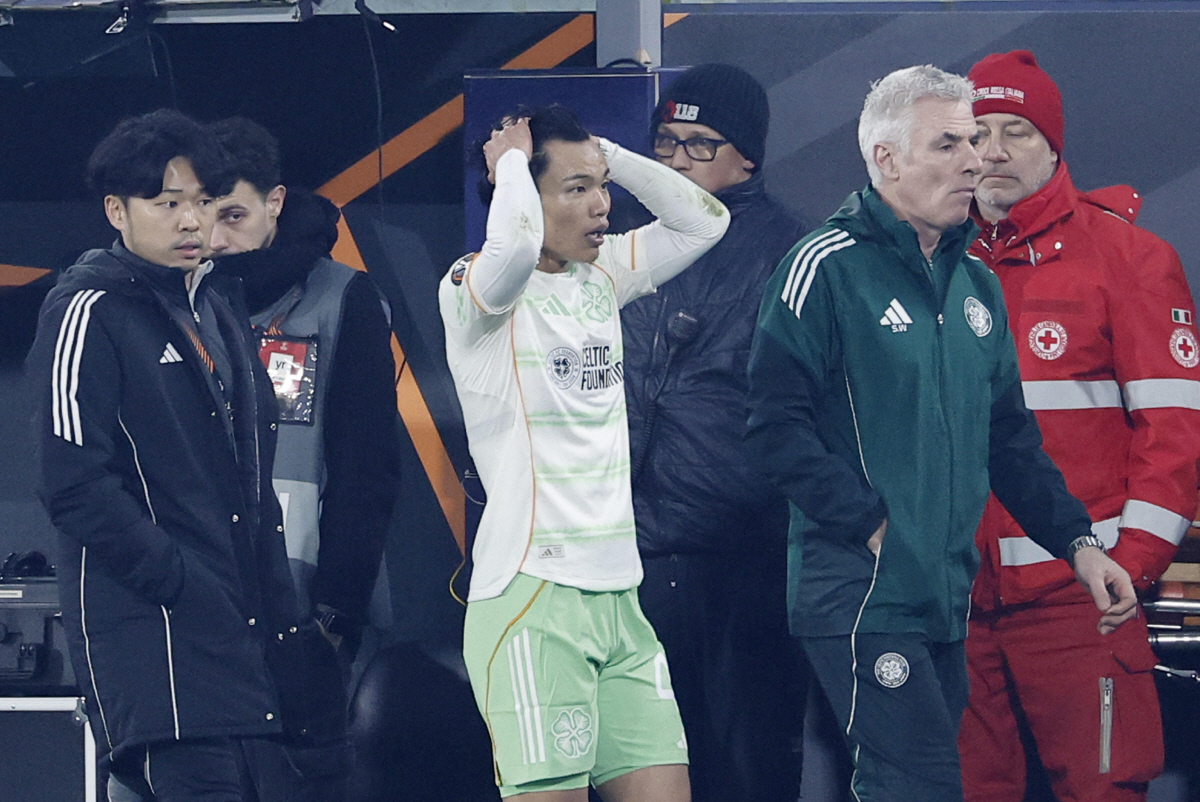
Recently, the football world was struck with both intriguing and unfortunate news. South Korea's key defender Kim Min-jae and Japan's talented midfielder Leo Hatate were both sent off nearly simultaneously in their respective matches. The dismissal of these two players, who carry the expectations of both Korea and Japan, goes beyond mere personal sanctions and significantly impacts the tactical operations of their respective clubs and the management of the entire season, warranting an in-depth analysis.
From a tactical standpoint, a sending off is one of the most critical variables in a game. The moment a player leaves the pitch, the numerical disadvantage transcends just being a man down. In modern football, where team cohesion and coordinated movement are paramount, a team reduced to 10 players inevitably faces severe disruptions in both defensive organization and attacking execution. The coach must promptly alter the formation, adjust tactical instructions, and sometimes make sacrificial substitutions. This overturns any premeditated game plan.
Considering Kim Min-jae's crucial defensive role at Bayern Munich and the South Korean national team, his absence poses a significant burden on the squad. He is not just a defender who clears the ball; he initiates the build-up from the back and possesses an exceptional ability to anticipate and neutralize opponent attacks. His void can greatly destabilize the defensive line and also affect the passing routes from defense to attack. Although Bayern Munich, as a big club, has a deep squad, finding an immediate replacement at Kim Min-jae's level to seamlessly execute his role is no easy task.
Similarly, Leo Hatate plays a crucial role in Celtic's midfield, taking charge of creativity and work rate. He performs an essential function during transitions between defense and attack, regulating the game tempo and connecting play with his passes. Hatate's dismissal could mean not only a weakened midfield presence but also a loss of the creative passing channels vital for attack development. Should the opposing team be adept at midfield battles, Hatate's absence could become a significant Achilles' heel for Celtic. The loss of a midfielder is more than just a defensive burden; it could severely stifle attacking opportunities.
An interesting aspect of the dual sending off is the differing perspectives of fans and the media, despite the varying circumstances in each incident. Generally, emotions are highly influenced by the context of the sending off, such as the severity of the foul, intent, and potential referee controversy. If the belief prevails that a player's dismissal was 'unfair' or resulted from an 'excessive decision,' fans tend to console and defend the player. On the contrary, if perceived as due to a clear error or unnecessary action, the criticism intensifies, with the narrative shifting to 'fallen from hero to zero.' The psychological and tactical impacts of an instantaneous decision on the field are indeed beyond imagination.
Disciplinary actions from these send-offs commonly lead to suspensions for subsequent matches, bringing substantial hurdles to a team’s future match management plans. Particularly during key moments, such as a title race or a relegation battle, the absence of core players can decisively influence a team’s objectives. The coach needs to identify substitute players, test new tactical combinations, and manage the overall morale of the squad, adding to the workload.
In conclusion, the simultaneous red card incidents involving Kim Min-jae and Leo Hatate highlight the substantial importance of individual player discipline, psychological management, and the manager’s crisis management skill in modern football. The unforeseeable consequences of a sending off directly affect a team’s tactical equilibrium and season performance. Observing how these two players overcome this ordeal and return to play pivotal roles for their teams promises to be a fascinating aspect to follow.
@KimMinjae @LeoHatate @BayernMunich @Celtic @KLeague @JLeague @FootballNews @SoccerAnalysis