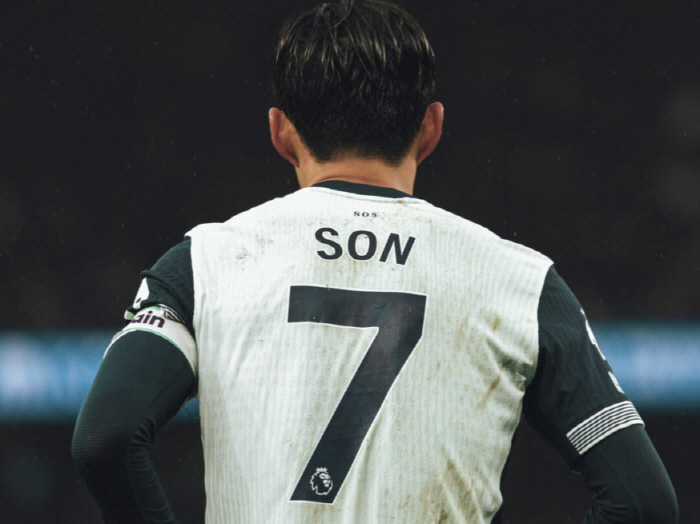
Recent news of 10,000 empty seats at Tottenham Hotspur's home match has left many football fans shocked. This phenomenon becomes particularly pronounced in the absence of Son Heung-min, regarded as the 'greatest Korean player in history.' This scenario holds deeper meanings beyond mere game results. In this analysis, we delve deep into the tactical and commercial impacts of Son's absence on Tottenham.
Firstly, discussing Tottenham's performance without acknowledging Son Heung-min's tactical value is difficult. He is more than just a striker who scores goals. His explosive speed and dribble breakthroughs, primarily operating as a left winger, are crucial weapons that disrupt opponent defenses. His two-footed shooting ability in and around the penalty box is considered among the best in the Premier League. Under manager Ange Postecoglou's tactics, Son has also fulfilled the role of a front-line striker, proving to be the 'solution provider' in team attacks. His excellent off-the-ball movements and penetrations into defensive backspaces enhance Tottenahm's attacking sharpness, posing a constant threat to opposing defenders. Considering this tactical significance, his absence affects not only the vacancy of an individual player but also severely impacts the overall balance and destructive power of team offense.
From a statistical perspective, Son’s scoring power shines particularly in challenging situations for Tottenham. His goals are more than mere scores; they have played crucial roles in bringing points and atmosphere to the team. His absence can lead directly to a decline in scoring ability, naturally affecting game results negatively. The occurrence of 10,000 empty seats in the recent match signifies more than a drop in performance. It can be interpreted as a clear statistical representation of Son's significant commercial and fan base influence on the team.
As the 'greatest Korean player in history,' Son Heung-min commands a massive global fan base beyond Asia. His participation in matches directly correlates to substantial spectator influx, significantly affecting sponsorship deals, jersey sales, and various commercial profit streams. From a sports business viewpoint, the presence of a star player goes beyond enhancing performance; it is a crucial element linked to elevating the club's brand value. In modern football, where reliance on specific superstar power is strong, iconic figures like Son become vital drivers ensuring ticket sales. The 10,000-seat gap starkly illustrates the cold reality that spectatorship greatly varies with Son's presence or absence.
This situation imparts significant lessons to the Tottenham club. In a long-term perspective, it suggests the need for a strategy to decrease dependence on a single player and enhance the overall team brand value. While Son Heung-min's presence is indeed a blessing for Tottenham, multifaceted efforts are required to minimize the tactical and commercial risks that can arise during his absence. This includes strengthening squad depth to partially substitute Son's role and maintaining appealing team play and performance that can draw fans to the stadium even without him.
In conclusion, the 10,000-seat gap due to Son Heung-min's absence is far from a one-time event. This is a vivid example of how significant the tactical and commercial impacts of 'Korea's greatest-ever player,' Son Heung-min, are on Tottenham. It is time for Tottenham to confront this painful reality and explore more solid and sustainable club management strategies for the future. Recognizing the value of star players while building a strong team identity beyond them will be Tottenham's next challenge.
@SonHeungMin @Tottenham @PremierLeague @FootballNews